Gambling Sites Not on GamStop: The Small Print Behind the Promise
 Available in US
Gambling sites not on GamStop promise access beyond Britain’s national online exclusion scheme, but that promise is narrow: an offshore site is not licensed in Great Britain, UK protections do not apply, and a foreign licence does not legalise offering commercial gambling here. The terms may be long; the distinction is short.

The name GamStop is often typed “gamestop”. It is the UK’s national online self-exclusion scheme, free to use and compulsory for online operators licensed in Great Britain. Since 31 March 2020, those operators have had to participate under Gambling Commission licence conditions. An offshore site is not covered by that system. That is not a safety feature; it is the absence of the British framework.
The Commission’s own evidence offers a useful reality check. Its analysis covering April 2025 to April 2026 estimated 2.5% of people who had gambled online in the previous four weeks had engaged with illegal gambling websites; a further 1.5% had done so earlier in the previous 12 months. That is a measured minority, not proof that the market is harmless or that every site is alike. A separate Commission dashboard identified 586 illegal sites accessible to GB consumers in September 2026. Sites and domains change; the paperwork matters.
This is a look at the clauses that matter: licensing, identity checks, deposits, bonuses, withdrawals and complaints. I would not call a site “best” because its banner is bright or its cashier lists a dozen currencies. The decisive question is what happens when a customer wants money back, disputes a decision, or needs the exclusion system to work.
What the Label Means for UK Sites Not on GamStop
Searches for gambling sites not on GamStop UK often blur two different facts: a site may be reachable from Britain, but that does not mean it is authorised to offer gambling to people here. The Gambling Commission says commercial gambling services cannot be offered to consumers in Great Britain without its licence, even if the operator holds a licence elsewhere.
Section 33 of the Gambling Act 2005 makes providing gambling facilities without the appropriate operating licence an offence. The law’s principal target is the provider, not an adult consumer using a site. Still, an operator’s breach does nothing to create enforceable British protections for its customers. An overseas regulator cannot replace the Commission’s remit, and a site’s accessibility is not evidence of legality.
GamStop applies to participating online gambling companies licensed in Great Britain. The scheme can take up to 24 hours to become effective; once registered, exclusion cannot be cancelled during its chosen term. When the term ends, it remains in place until the person contacts GamStop to remove it. An offshore site is not a way round an exclusion, and using one does not alter the scheme’s status or duration.
For support, the National Gambling Helpline is operated by GamCare and is free on 0808 8020 133, 24 hours a day, every day. The number is also available through live chat and WhatsApp. In Wales, 0808 2819 265 is also listed. These are help services, not a substitute for checking the terms or the law.
The British Benchmark for Sites Not on GamStop
British-licensed sites provide the useful comparison because the Commission sets rules on fair terms, customer identity, funds and complaints. This is not a claim that every licensed operator behaves impeccably: withdrawal complaints remain the Commission’s leading complaint topic. But there is a regulator, a public register, and routes that offshore customers may not have.
The Commission’s operator data for June to September 2024 recorded 44.2 million withdrawals at large online operators. Of those, 96.3% cleared automatically, 3.5% cleared within 24 hours and 0.1% took up to 48 hours. The period and population matter: this is not a guarantee for every payout, and it is not a benchmark for offshore sites. It is evidence of how a regulated market can process withdrawals at scale.
| What to compare | British-licensed operator | Offshore operator serving or accepting GB traffic |
|---|---|---|
| Permission to offer gambling in Great Britain | Gambling Commission operating licence required | A foreign licence does not authorise offering commercial gambling in Great Britain |
| GamStop participation | Required for online operators since 31 March 2020 | Not connected to GamStop; exclusion does not cover it |
| Bonus wagering ceiling | No more than 10 times bonus funds, from 19 January 2026 | Not bound by the UKGC cap; offshore offers are reported at 25x–40x [unconfirmed] |
| Identity checks | Identity must be established and verified before gambling | Policies and enforcement may vary by operator and jurisdiction |
| Complaints | Internal process, then free ADR if unresolved within eight weeks | May depend on the operator’s stated foreign dispute process |
The Commission’s 10-times bonus cap and its fair-terms rules are meaningful, not decorative. By contrast, offshore welcome-bonus multipliers of 25x–40x are reported rather than established by a regulator; treat that range as an indication, not a universal rule. The real issue is the definition: whether the wagering applies to bonus alone or deposit plus bonus, which games count, and what happens if time runs out.

The Licence Is Not the Whole Contract
A licence badge is a starting point, not a verdict. Curaçao’s LOK framework took effect on 24 December 2024 and replaced the old master-licence and sub-licence model with direct licensing by the Curaçao Gaming Authority. The old orange certificates ended on 15 October 2025. A historic /JAZ number is not proof of a current licence.
The CGA issues a Certificate of Operation Seal for an approved, registered player-facing domain. Clicking it should lead to the CGA certificate page; the certificate’s domain must match the site in the address bar. A generic licence certificate is not interchangeable with that domain-specific certificate. But even a valid Curaçao licence is not a British licence, and it does not authorise a site to offer gambling to consumers in Great Britain.
Terms are where the practical difference becomes visible. Check the named contracting company, governing law, the exact domain, deposit and withdrawal rules, inactivity clauses, identity requirements and the dispute procedure. “We may withhold funds at our sole discretion” is not reassuring language. Neither is a promise of a fast payout paired with a clause allowing indefinite manual review.
Five Signs the Operator’s Terms Deserve a Closer Look
The Domain Matches the Licence
A real certificate should identify the site’s exact domain, not merely a corporate name. For a claimed Curaçao Certificate of Operation, follow the seal to the official verification page and compare the displayed domain with the address bar. A mismatch is a warning, not a clerical nicety.
The Contracting Company Is Named
Look for the legal entity that holds the customer relationship, its address and the regulator it says supervises it. A brand name alone is not a contracting party. If the terms leave the operator’s identity vague, there is no clear counterparty when a balance is disputed.
Withdrawal Clauses Set a Process
A credible clause explains verification, processing stages, fees and what information may be requested. “Up to 30 business days” with repeated discretionary extensions is delay written into the contract. British rules do not set one fixed payout deadline, but they do prevent an operator asking at withdrawal for information it could reasonably have requested earlier, unless another legal obligation requires it.
Bonus Terms Can Be Calculated
The terms should say whether the wagering multiple applies to bonus funds or to bonus plus deposit, which games contribute, the maximum stake and any deadline. A headline bonus is marketing; these clauses determine whether it can become withdrawable money.
Complaints Have a Named Route
Check the address for complaints, the response process, and the named independent dispute body. An offshore operator may list an ADR provider, but that does not make it part of Britain’s Commission-approved ADR system. Vague wording such as “management’s decision is final” is not a dispute route; it is a locked door with a sign on it.
Why Identity Checks Happen and When
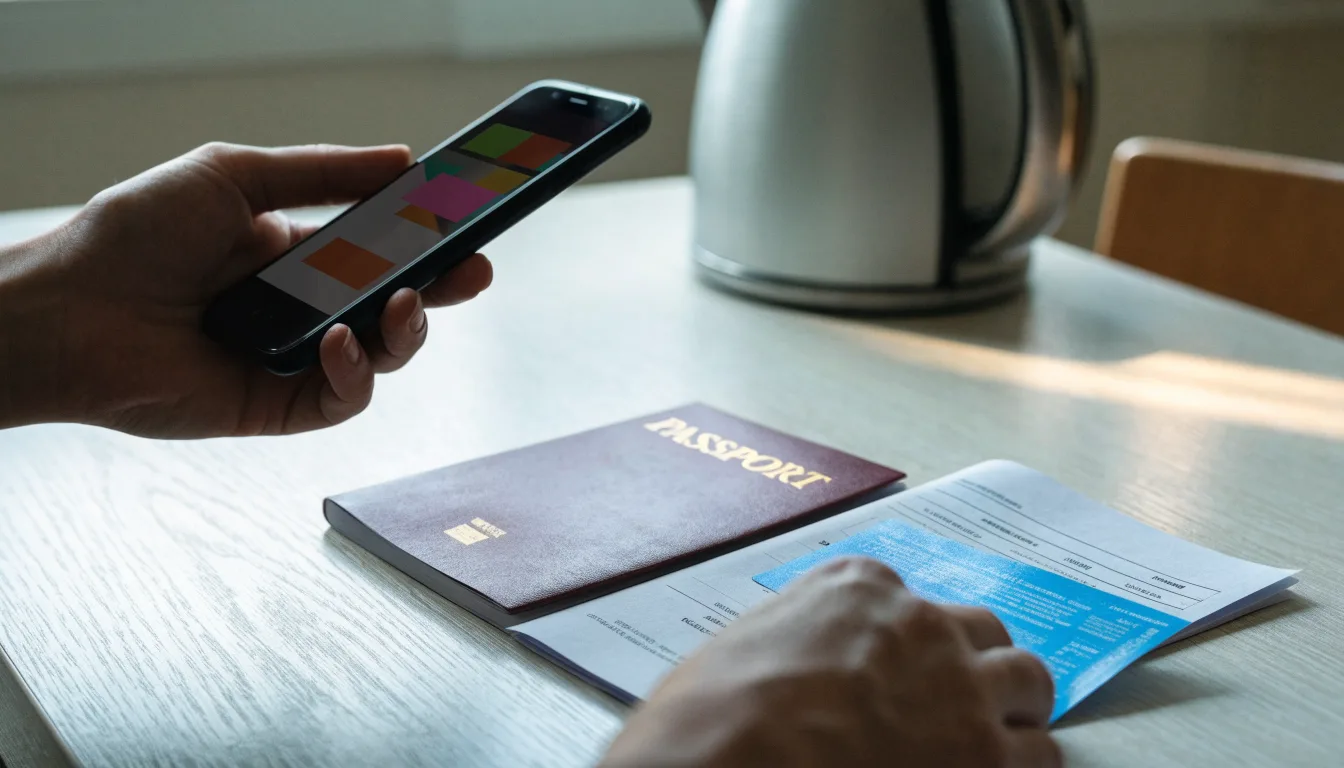
British operators must establish and verify identity before a customer is allowed to gamble, including name, address and date of birth. The operator may use reliable electronic sources or ask for documents such as a passport, driving licence or household bill. Checks can be repeated if information changes or legal obligations require updated due diligence.
The awkward point is timing. The Commission’s licence condition says a withdrawal request must not trigger a demand for information that could reasonably have been requested earlier. Anti-money-laundering obligations can still require information at that stage. That is a genuine exception, not a blank cheque for routine delay. The Commission reported in August 2026 that over a quarter of complaints reaching its contact centre concerned identity verification.
Offshore operators are outside the Commission’s licensing controls. Their own terms may reserve broad rights to ask for documents, pause an account or review transactions. Before any payment, the relevant questions are what documents may be requested, how they are transmitted securely, whether the account name must match the payment method, and what happens to funds while a check is pending. Terms that answer none of these are not flexible; they are unfinished.
A Practical Terms Check
- Identify the operator. Find the legal company, its jurisdiction and the precise domain. This establishes who is contracting with customers and whether the licence claim can be checked.
- Verify the licence independently. Use the regulator’s register or verification service, rather than relying on a seal image. A copied badge proves only that someone can copy a badge.
- Read withdrawal and identity clauses first. Note document requirements, review periods, fees and any right to suspend payouts. These clauses matter when a balance is no longer hypothetical.
- Work through the bonus arithmetic. Confirm the wagering base, eligible games, maximum stake, expiry and cashout cap. Compare the offer with its full terms, not the headline figure.
- Read complaints and governing-law provisions. Check who handles a dispute, deadlines for raising it, and whether the process is independent. A regulator in another jurisdiction may not offer the same remedy as British ADR.
- Check exclusion and support information. GamStop applies to British-licensed online operators; an offshore site is not covered. If gambling is causing harm, GamCare’s National Gambling Helpline is free on 0808 8020 133, around the clock.
Why “Best” Is a Terms Question
The phrase best gambling sites not on GamStop invites a league table. I would rather see the contract. A ranking based on welcome offers or game counts cannot tell whether withdrawals are capped, whether a bonus can be disentangled from a deposit, or whether an independent body will hear a complaint.
The Commission’s complaints rules require British licensees to provide access to an approved alternative dispute resolution entity free of charge if an internal complaint is not resolved to the customer’s satisfaction within eight weeks. The operator’s own complaints process comes first. The Commission itself is a regulator, not an ombudsman; it records complaints but does not retrieve individual customers’ money.
Some offshore regimes also specify dispute processes. Anjouan Gaming, for example, requires its licensees to name an approved ADR provider in player-facing terms and expects the operator to handle complaints within 30 days before escalation. That is a process worth checking, but it is not the UK system and does not remove the legal issue of offering gambling to people in Great Britain without Commission permission.
“Best” is therefore not a fact that a banner can settle. It is a judgement about verifiable licensing, precise terms and credible remedies—and even a tidy document cannot supply British protection where no British licence exists.
Frequently Asked Questions
What gambling sites are not on GamStop?
Sites not licensed in Great Britain are generally not part of GamStop, whose participation requirement applies to online operators holding Commission licences. That does not mean they are authorised to serve Britain: the Commission says a foreign licence does not permit commercial gambling here. Site availability, a foreign badge and legal permission are three different things.
Is a gambling site not on GamStop legal in the UK?
The Commission states it is illegal for a business to offer commercial gambling services to consumers in Great Britain without its licence, including where the operator holds a licence elsewhere. Section 33 of the Gambling Act 2005 concerns providing facilities without the required operating licence. The central legal exposure falls on the provider; the customer does not gain UK regulatory protection by using the site.
Are online gambling sites not on GamStop safe?
There is no single answer that applies to every operator, but a foreign licence is not equivalent to a British one. Terms may permit extended reviews, restrict bonus-derived winnings or offer a complaint route outside UK-approved ADR. Verify the specific domain and company, then read withdrawal, identity and dispute clauses. A seal alone is not evidence that a customer can recover funds.
Are there Welsh gambling sites not on GamStop?
The relevant distinction is not whether a site is Welsh, but whether it holds a Gambling Commission licence and participates in GamStop. The same UK licensing baseline applies across Great Britain. The National Gambling Helpline lists 0808 2819 265 for callers in Wales, alongside the 24-hour number 0808 8020 133.
Does GamStop exclusion end automatically?
No. A GamStop exclusion remains in force for its chosen term and cannot be cancelled during that period. After the term ends, it stays in place until the person contacts GamStop to remove it. Registration may take up to 24 hours to become effective. Offshore sites are not a legitimate workaround and are not covered by the scheme.
What can be done about a delayed withdrawal from an offshore site?
Start with the operator’s written complaints process and retain the terms in force, correspondence and transaction records. Check whether the named foreign regulator or ADR provider accepts the dispute. Britain’s Commission cannot resolve an individual complaint against an unlicensed offshore operator or secure a refund. Do not assume a British complaint route applies merely because the site accepts customers in Britain.
The Small Print Is the Point
A foreign licence may describe oversight elsewhere, but it cannot turn an offshore site into a British-licensed operator or extend GamStop to it. For support, GamCare’s National Gambling Helpline is free on 0808 8020 133, 24 hours a day. The Commission identified 586 illegal gambling websites accessible to GB consumers in September 2026.
Casinos Not on GamStop
Content created by the «Wagercentraluk.com» team