Casino Apps That Pay Real Money: What the Small Print Says
 Available in US
Casino apps that pay real money are gambling services on a phone, not a shortcut to easy cash. In Great Britain, a site taking commercial bets must hold a Gambling Commission licence; offshore operators are not licensed here, and UK protections do not apply to them. That gap matters more than the app icon.

The words “real money” are doing some heavy lifting. A balance on a screen is not cash in a bank account, and a promise of fast withdrawals says little about the checks or terms that come before payment. I look first at the licence, then the rules for withdrawing, and only then at the offer being advertised.
The Gambling Commission recorded 44.2 million withdrawals by customers of large online operators between June and September 2024. Of those, 96.3% cleared automatically. That is a useful benchmark for licensed operators, not a guarantee that every withdrawal is immediate. For offshore sites, the protections behind that comparison are absent.
A note on the name: the exclusion scheme is written GamStop, though it is often typed “gamestop”. Offshore sites are not covered by it; they are not a way around self-exclusion. A GamStop exclusion lasts for its chosen term and stays in place afterwards until the person contacts GamStop to remove it. For support, the National Gambling Helpline, operated by GamCare, is free on 0808 8020 133, 24 hours a day, every day.
What “Real Money” Means in an App
A casino app is usually the mobile version of an operator’s gambling service, whether downloaded from an app store or opened in a phone browser. The software is only the front door. The licence, account terms, payment arrangements and complaint route belong to the operator behind it.
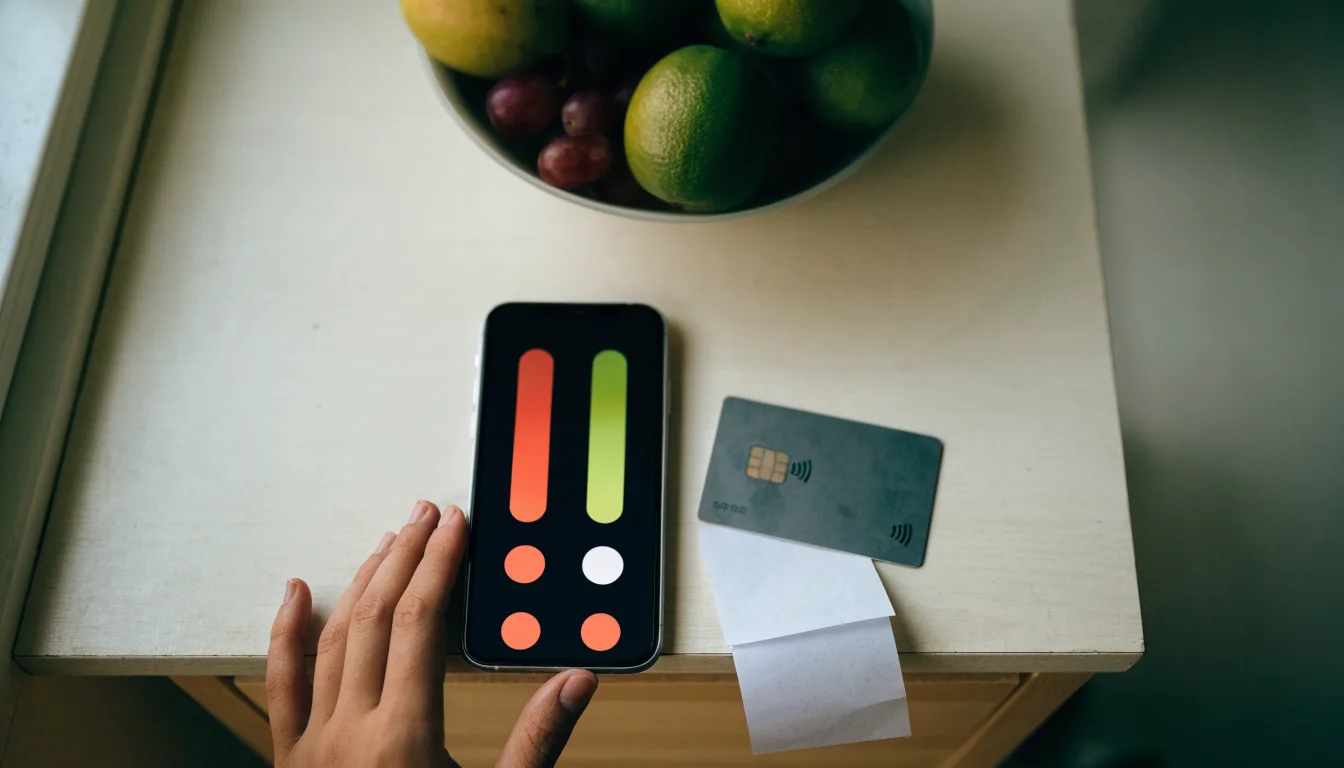
The phrase “casino apps that pay real money no deposit” is particularly slippery. A no-deposit bonus may be subject to wagering, a time limit or a cashout cap; “free” describes the entry cost, not necessarily the route to a withdrawable balance. In Britain, licensed operators have been barred since 19 January 2026 from applying wagering requirements above 10 times bonus funds. Offshore operators are not bound by that UK cap.
The Commission’s consumer research published in July 2026 found that 49% of people who had gambled in the previous 12 months agreed that withdrawing and collecting winnings was quick and easy; 33% were neutral and 18% disagreed. Even on the regulated side, “easy payout” is not a universal experience. On an offshore site, the uncertainty is greater, and the available UK routes of redress do not follow the app abroad.
How Online Casino Apps Compare to the British Benchmark
For online casino apps that pay real money, the sensible comparison is with a British-licensed operator, not with the most confident promotional banner. The Gambling Commission’s figures for June to September 2024 show 96.3% of withdrawals clearing automatically, 3.5% within 24 hours and 0.1% taking up to 48 hours. The figures cover 44.2 million withdrawals at large operators.
That is a strong benchmark, but it is not a promise of instant payment. The Commission sets no fixed maximum number of days for a withdrawal. It does require fair, transparent terms, and says an operator should not add friction purely to serve its commercial interests. If identity information could reasonably have been requested earlier, a withdrawal request should not become the excuse to demand it—though legal anti-money-laundering duties can still require checks at that point.
| Payment route or condition | What the figures or rules say | What the small print should clarify |
|---|---|---|
| Large UK-licensed operators | 96.3% cleared automatically in June–September 2024 | Whether the operator may need extra identity or anti-money-laundering checks |
| UK-licensed operators | 3.5% cleared within 24 hours in the same period | When the processing clock starts and whether weekends affect it |
| UK-licensed operators | 0.1% took up to 48 hours in the same period | What reason may delay a withdrawal and how it will be explained |
| Offshore sites | No UK withdrawal benchmark or UK licence protection applies | Processing stages, fees, limits, review triggers and dispute route |
The table’s offshore row is deliberately not dressed up with a guessed number. There is no reliable UK-licensed benchmark that can be applied to an unlicensed operator. A site can claim “instant payouts”; the claim is not a regulator-backed service standard.
The Commission has also banned reverse withdrawals for remote operators since 31 October 2021. Once a withdrawal is requested, a licensed operator must not offer the option to cancel it and gamble the same money again. A site that lets a customer reverse a withdrawal is advertising a feature British rules have rejected for good reason.
The Licence Is the Difference That Counts
The Gambling Commission says it is illegal to offer commercial gambling services to consumers in Great Britain without its licence, including where an operator has a licence somewhere else. That is the UK baseline. A foreign licence may say something about the regulator named on it; it does not make an operator UK-licensed, and it does not give the Commission authority over its service.

The Commission advises checking its public register and confirming that the operator’s activities and domain names match. A logo pasted into a footer is not evidence. Neither is an old certificate or a search result.
For an offshore licence, the verification process depends on the jurisdiction. In Curaçao, the LOK reform replaced the former master-licence and sub-licence model with direct licensing and supervision by the Curaçao Gaming Authority. The legacy orange sub-licence certificates ended on 15 October 2025. A historic /JAZ number or legacy seal is not proof of a current licence. The CGA says its Certificate of Operation Seal should redirect to its certification service, and the domain on the certificate must match the site being used.
That check may help establish what a foreign regulator says about an operator. It does not bridge the gap to a British licence. The Commission’s Illegal Markets team reported that from April 2024 it referred 447,778 URLs to search engines and secured 287,961 removals, yet disruption is not the same as an individual remedy. Offshore terms that reserve broad discretion to void winnings, impose withdrawal delays or restrict the amount cashed out deserve particular suspicion. British fair-terms rules cannot simply be assumed to apply.
Understanding Withdrawal Terms
A casino app that pays real money should state how a withdrawal works before an account is funded. The first step is usually a request through the account, followed by processing and then a transfer through the selected payment route. The operator may also verify identity or review a transaction for legal reasons. On a British-licensed site, identity checks are expected before gambling; the Commission says operators should explain in advance what documents might be needed.
Later checks can still arise where circumstances or legal duties require them. A bank statement or other information may be sought as part of anti-money-laundering checks. That is not the same as an operator inventing a new hurdle after a win. British licence condition 17.1.1 says a withdrawal must not trigger a demand for information that the operator could reasonably have requested earlier, while preserving obligations that apply at that time under other laws.
Warning signs are often in the verbs: “may delay”, “sole discretion”, “subject to further review”, or “one withdrawal at a time”. The Commission has said terms giving an operator sole discretion to void or withhold winnings are unfair. In October 2026 it announced a £900,000 regulatory settlement involving, among other failures, an unfair one-withdrawal-at-a-time clause and manual reviews that generated extra information demands.
For comparison, British rules do not permit an operator to cap how much a customer may withdraw from their deposit balance. A processing fee can be allowed if it reflects direct costs, is fair and transparent, and is disclosed before a deposit. If an app is silent on fees, limits or review stages, the silence is information.
Five Trust Checks for Safety
The Licence Matches the App
Check the operator on the Gambling Commission’s public register, then compare the registered domain with the app or website. A familiar name in an app-store listing is not a licence. If the domain is missing or mismatched, the regulator’s register does not verify that service.
The Withdrawal Rules Are Specific
Look for processing stages, time estimates, fees, minimums, maximums and reasons a withdrawal can be paused. A vague promise of “fast payouts” is marketing; a clause allowing indefinite delay is a warning. Compare the wording with the payment method’s own limits and charges.
The Identity Checks Are Explained Before Deposit
A UK-licensed operator should tell customers before deposit what identity information or documents may be required and in what circumstances. Check the account and terms for this explanation. A first request for documents only at withdrawal is the very friction the Commission has criticised.
The Bonus Has a Clear Exit
Read the wagering multiple, eligible games, expiry, maximum stake and withdrawal conditions before treating a bonus as money. British rules cap wagering at 10 times bonus funds from 19 January 2026. If an offshore offer includes a cashout cap or broad “bonus abuse” language, the practical value may be much less than the headline.
There Is a Real Complaint Route
A British-licensed operator must offer access to an approved alternative dispute resolution entity if its own complaints procedure has not resolved a dispute within eight weeks. Check the named provider and the complaint steps in the terms. An offshore regulator’s complaint process may exist, but it is not the same as British ADR.
A Practical Check Before Any Account Is Opened
- Identify the operator, not just the app. Find the legal operator name and the exact domain. This matters because the licence attaches to the business and its authorised activities, not to a polished icon.
- Check the British register. Confirm that the Gambling Commission lists the operator and the domain. This establishes whether British licensing protections apply; a foreign licence is not a substitute.
- Read withdrawal terms before looking at bonuses. Note processing stages, fees, limits and reasons for review. This is where “pays real money” becomes a testable claim rather than a slogan.
- Separate deposit money from bonus money. Check wagering, game eligibility, deadlines and any cap on bonus-derived winnings. This prevents a promotional balance being mistaken for cash that can be withdrawn.
- Check the identity and payment rules. Find what documents may be requested, which payment routes are accepted and whether the account name must match the payment method. This helps identify avoidable snags before funds are involved.
- Find the complaint route and customer-funds disclosure. A UK operator must explain its customer-funds protection rating and give access to approved ADR after its internal process. This matters if a balance is disputed or the operator fails.
The Small Print on “Free” and “Instant”
“Free casino apps that pay real money” can mean a free-to-play game with no cash-out at all, or a real-money service advertising a bonus. Those are different products. A casino game app can award virtual coins, points or prizes without providing a withdrawable cash balance. The word “pays” should be checked against the withdrawal clause, not inferred from an in-game animation.
Likewise, casino apps that pay real money instantly are not a category with a guaranteed settlement time. Even the Commission’s large-operator figures show a mix: most cleared automatically, some within 24 hours and a small share taking up to 48 hours. A payment provider may then have its own processing time. “Instant” can describe the first stage, not the moment money reaches a bank account.
The Commission receives around 2,000 complaints a year about withdrawal delays, which remain a leading complaint topic. It says operators should explain why a withdrawal has been delayed or refused, subject to restrictions on tipping off in money-laundering cases. That distinction matters: a legitimate legal check is possible; a commercial tactic to keep funds in play is not a sensible standard.
Help and Self-Exclusion
GamStop blocks access to online gambling companies licensed in Great Britain. It can be set for six months, one year, five years or five years with auto-renewal. It cannot be cancelled during the chosen exclusion period; afterwards, it remains in place until the person contacts GamStop to remove it. Offshore sites are not covered by the scheme, but that does not make them a safe or legitimate alternative.
The Commission warned in January 2025 that casino games supplied by licensed operators were appearing on unlicensed sites available to people in Great Britain, which may have inadequate social-responsibility and anti-money-laundering controls. A familiar game is not proof of a familiar operator.
The National Gambling Helpline, operated by GamCare, is free on 0808 8020 133, 24 hours a day, every day of the year. It is also available through live chat and WhatsApp. The service offers information, advice and support; it is not a crisis line.
Frequently Asked Questions
Are there any casino apps that pay real money?
Yes. Licensed online casinos may provide real-money gambling through mobile apps or mobile websites. In Great Britain, the operator must hold a Gambling Commission licence to offer commercial gambling services to consumers. Check the public register and the exact domain; an app-store listing or overseas licence alone does not establish British licensing.
Is there a casino app that pays real money with no deposit?
Some operators advertise no-deposit bonuses, but “no deposit” does not mean unrestricted cash. The offer may carry wagering requirements, a deadline, eligible-game limits or a cap on what can be withdrawn. British rules cap wagering requirements at 10 times bonus funds from 19 January 2026; offshore sites are not bound by that cap.
What are the best casino apps that pay real money?
There is no honest universal “best” without a defined test. A useful comparison starts with a verifiable British licence, clear withdrawal terms, identity checks explained before deposit, transparent bonus conditions and a recognised complaint route. I would put those ahead of app-store ratings or a large welcome offer; neither tells much about getting funds out.
Can casino games pay real money through Cash App?
A casino game’s ability to award cash and whether a particular payment service accepts gambling payments are separate questions. The facts available here do not establish Cash App as an accepted or reliable route for British casino withdrawals. Check the operator’s payment terms and the payment provider’s own rules rather than assuming a wallet named in an advert will work.
Do casino apps that pay real money pay instantly?
Not always. Gambling Commission data for June to September 2024 found that 96.3% of withdrawals at large online operators cleared automatically, 3.5% within 24 hours and 0.1% up to 48 hours. That covers operator-side processing, not a guarantee of when a bank or payment provider makes funds available.
Do offshore casino apps have the same protections as UK-licensed apps?
No. An offshore licence is not a Gambling Commission licence, and British protections such as the UK complaint and licensing framework should not be assumed to apply. The Commission says commercial gambling services offered to consumers in Great Britain require its licence even if an operator holds a licence elsewhere. A foreign certificate cannot close that gap.
The Final Balance
The useful question is not whether a casino app says it pays real money, but whether its licence and withdrawal terms make that promise accountable; in the Commission’s June–September 2024 data, 96.3% of withdrawals at large operators cleared automatically.
Casino Apps
Content created by the «Wagercentraluk.com» team